
The Chestnut: The Bread of the Mountain Woods
The chestnut is an emblematic autumn fruit that charms with its generosity and woody flavor. Long considered the dietary staple in rugged regions, it is now a product synonymous with celebrations and fine gastronomy. Discover everything you need to know about this exceptional product: its origin, appearance, texture, and taste.
Origin of the Chestnut
A Heritage of Regions with Character
The chestnut is the fruit of the chestnut tree, a majestic tree that flourishes in mid-mountain areas. In France, it is inseparable from terroirs such as Ardèche, the Cevennes, or Corsica, where it was long nicknamed “the bread tree.” Its cultivation relies on a fragile balance between altitude and the humidity of schist or granite soils. The Ardèche Chestnut even benefits from a Protected Designation of Origin (PDO), guaranteeing the use of traditional varieties and ancestral expertise.
A Harvest Rhythm by Autumn
The chestnut harvest takes place between September and November, when the prickly burs fall to the ground and open naturally. This process requires special attention: the fruits must be gathered quickly to prevent them from spoiling due to soil moisture. After harvesting, they are often sorted and sometimes dried in traditional “clèdes” (drying sheds), a method that concentrates the sugars and extends their shelf life.
Appearance and Texture
A Rustic and Shiny Appearance
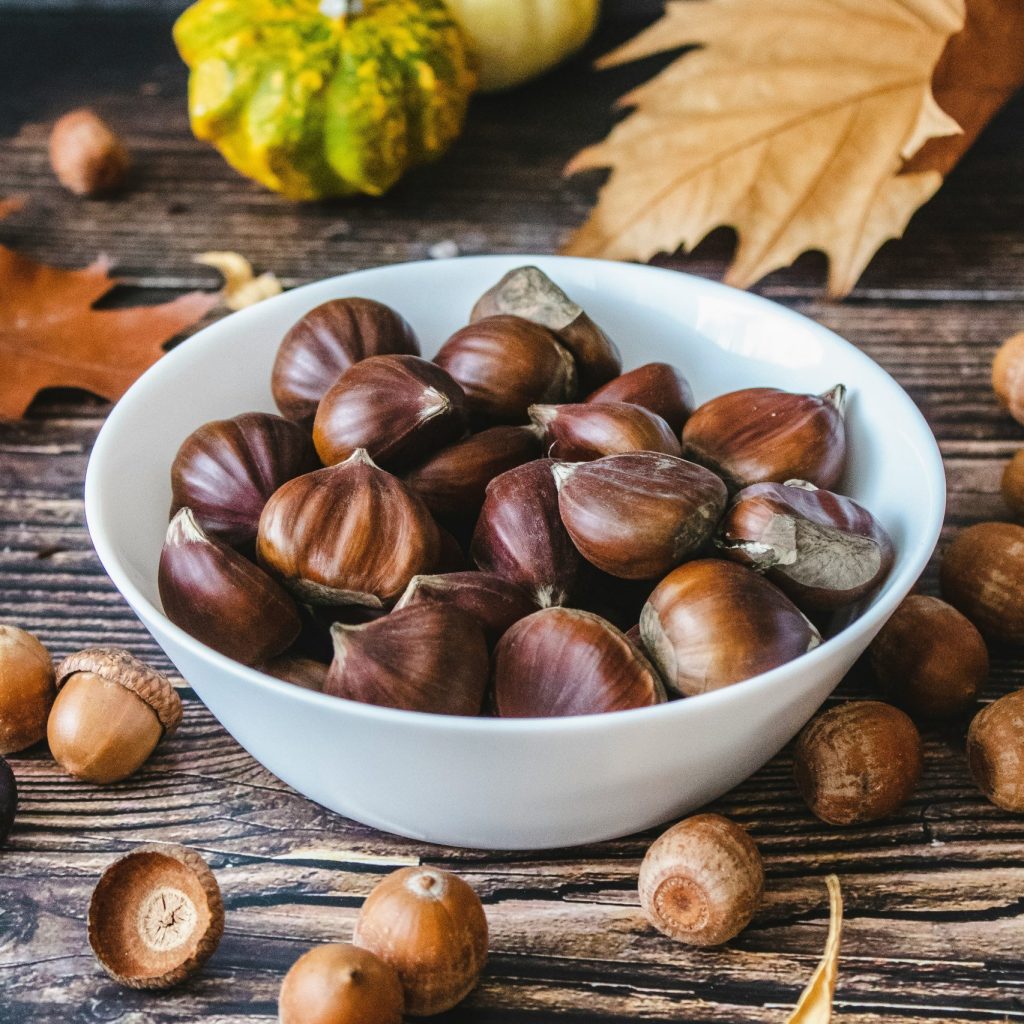
The chestnut has a rounded shape with one flat side, protected by a smooth brown shell called the “tan.” Its skin is a shiny mahogany brown, sometimes streaked, making it particularly attractive when it emerges from its bur. Once stripped of its shell and its thin inner skin (the pellicle), it reveals a cream-colored flesh, dense and compact, immediately evoking the warmth of winter meals.
A Mealy and Melting Texture
The texture of the chestnut is unique in the world of fruit. Unlike juicy fruits, it has a dense flesh rich in starch. Once cooked, this texture becomes mealy while remaining incredibly melting in the mouth. It offers a consistent bite that provides a sense of immediate comfort. It is this particular structure that allows it to be transformed into anything from smooth purées to whole pieces in slow-cooked dishes.
Taste and Culinary Uses
A Mellow and Sweet Taste
The taste of the chestnut is subtle and comforting. It develops notes of hazelnut, sweet potato, and honey, with a slight bitterness if consumed with its small inner skin. This natural sweetness makes it a versatile ingredient, capable of transitioning seamlessly from savory to sweet dishes.
Varied Applications
The chestnut is a choice ingredient for many recipes. Here are some ideas for including it in your menus:
Roasted over a wood fire: The timeless classic of autumn evenings, for an incomparable smoky taste.
In a velouté: Blended with a bit of cream and broth for a smooth, woody appetizer.
As an accompaniment: Pan-seared with mushrooms or Brussels sprouts to accompany festive poultry.
In desserts: In the form of chestnut cream or marrons glacés for lovers of refined sweets.
The Chestnut: A Nutritious Product
Rich in Complex Carbohydrates and Gluten-Free
The chestnut is a particularly energetic and nutritious food. Unlike other nuts, it is low in fat but rich in complex carbohydrates, which provide long-lasting energy and promote satiety. It has the immense advantage of being naturally gluten-free, making it a valuable alternative for those with celiac disease, whether in the form of flour or the whole fruit.
Source of Potassium and Magnesium
In addition to its energy contribution, the chestnut is an excellent source of essential minerals such as potassium, magnesium, and iron. It also contains B-group vitamins and vitamin C (when fresh). These nutrients are essential for the proper functioning of the nervous system and for fighting winter fatigue. Including chestnuts in your diet is therefore an excellent way to support your body during the cold season.
Conclusion
The chestnut is a refined local fruit, appreciated for its authentic origin, its warm appearance, its melting texture, and its sweet taste. Versatile and nutritious, it finds its place in a multitude of recipes, from veloutés to the most prestigious desserts. By choosing the chestnut, you are opting for a quality product capable of warming up your culinary creations and satisfying palates in search of traditional and authentic flavors.
To learn more about our Chestnuts and discover why we are the preferred choice for gastronomy professionals, visit our product sheet. There, you will find all the information necessary to place your order and benefit from our premium quality products.
Based in Rungis, our company specializes in the import and export of fresh, frozen, and dry products worldwide. For over 25 years, we have put our expertise at the service of Michelin-starred chefs, retailers, and wholesalers, offering a meticulous selection of the best products to meet your needs.
Do not hesitate to contact our team for any questions or specific requests. We are here to help you find exactly what you need and to optimize your shipments.
